







Free written scope consultation - allowances, timeline, and change-order rules on paper before a single trade is scheduled
Styles & brands we work with







See the difference
 Before
 After
After Before
 After
After Before
 After
AfterHow Much Does Tub-to-Shower Conversion Cost in San Francisco?
A tub-to-shower conversion in San Francisco typically costs between $4,130 and $11,800, with most families paying around $7,500 for a standard 5-foot alcove conversion using mid-range fixtures and a fiberglass or acrylic pan. The final number moves up or down based on the condition of your subfloor, whether valves and plumbing need repositioning, the wall surround material you choose, and whether the home is a pre-1979 building with cast-iron drains still in place. A straightforward conversion with no structural surprises usually lands in the $5,000 – $8,500 range. We’ll walk through exactly where the dollars go below.
Key Takeaways: Tub-to-Shower Conversion Pricing in San Francisco
- Typical total cost: $4,130 – $11,800 for a complete conversion in San Francisco
- Standard 5-foot alcove conversion: $5,000 – $8,500 with mid-grade materials
- What drives cost up: cast-iron drain replacement, shower valve relocation, tile surround, subfloor repair, cramped access or upper-floor units
- What keeps cost down: keeping the existing drain location, choosing an acrylic or fiberglass surround, using the existing footprint, scheduling when the crew doesn’t need to carry materials up four flights
- Free estimates: yes – call (831) 480-4497 for a written price before any work starts
Tub-to-Shower Conversion Cost Breakdown (2026)
Here’s where the money actually goes on a San Francisco conversion – not a contractor’s overhead number, but the physical work, materials, and labor that make up the bid.
| Line Item | Typical Cost Range | Notes |
|---|---|---|
| Demolition and haul-away | $350 – $850 | Removing the old tub, wall surround, and drywall; haul-away fees run higher if the tub is cast iron and the building has no freight elevator |
| Shower base / pan | $400 – $1,400 | Acrylic or fiberglass on the low end; solid-surface or tile-set pan on the high end |
| Wall surround materials | $700 – $3,200 | Acrylic or fiberglass panels at $700 – $1,500; large-format porcelain tile with waterproofing runs $2,000 – $3,200+ |
| Shower valve and trim | $250 – $900 | Pressure-balancing valve and trim kit. Kohler and Moen trim kits run $150 – $450; Grohe runs higher |
| Plumbing modifications | $500 – $2,500 | Raising the shower head, relocating the valve, replacing old supply lines. Cast-iron waste line replacement in a pre-1979 building pushes toward the top of this range |
| Waterproofing and backer board | $400 – $1,200 | Schluter Kerdi or cement board with membrane – you should know which one you’re getting and see it on the written price |
| Glass door or curtain rod | $150 – $1,200 | A simple curtain rod runs under $200; a custom frameless glass door starts around $600 and climbs fast with hardware finish |
| Grab bars and accessories | $80 – $400 | Blocking inside the wall for a future grab bar costs almost nothing during the rough-in and saves $300+ later |
| Permits | $200 – $600 | SF Department of Building Inspection fees vary by project scope; a like-for-like shower conversion without drain relocation often qualifies for a simpler permit path |
| Finish work (drywall, paint, trim) | $300 – $800 | Patching where the tub deck met the wall, repainting the alcove, sealing joints |
Those numbers are the honest middle of the San Francisco market in 2026. What pushes a job from the $5,000 side of the bell curve toward $11,000 is rarely the fixtures – it’s what the crew finds behind the wall and under the floor once the tub comes out.
How the Written Price Works at Elmstead Remodeling
Every project we take on in San Francisco starts with a written price before any work begins. That means the number on the page is the number you approve – no “we found a surprise so the price is now different” conversation three days into the job unless a genuine structural issue is uncovered that no contractor could have seen before demolition. When structural surprises do surface, you’ll see the new number in writing before anything else gets touched. We stand behind the work with a 365-Day Done Right Promise: if something isn’t done right after the project is complete, we make it right. No fights, no “that’s out of scope.” Not doing right by the work isn’t an option.
What Affects Tub-to-Shower Conversion Pricing in San Francisco
San Francisco is not like the surrounding Bay Area suburbs. The buildings are older, the permits are stricter, the crews have less room to maneuver, and the buildings themselves – Victorians, Edwardians, mid-century towers – each bring their own quirks. Here’s what moves the final price in this market specifically.
- Pre-1979 drain lines. A large share of San Francisco’s housing stock was built before 1979, which means cast-iron waste lines. Cast iron corrodes from the inside out, and the joint where the tub drain meets the stack often crumbles during demolition. Replacing a section of cast-iron drain inside the wall or floor adds $800 – $2,000 and requires access that a fiberglass tub used to hide. If you hear “we won’t know until we open the wall,” they’re not being evasive – they’re being honest about cast iron.
- Shower valve location. Moving a shower valve from tub height (about 18 – 24 inches off the floor) to standing height (38 – 48 inches) means cutting into studs, extending supply lines, and sometimes re-framing. That’s $500 – $1,200 depending on what the existing plumbing looks like. Keeping the valve in the same wall cavity but raising it is much less expensive than routing it to a different wall entirely.
- Wall surround material. The single biggest material variable. Acrylic panels from companies like American Standard or Kohler run $700 – $1,500 installed and are easy to clean. Large-format tile with a Schluter waterproofing system runs $2,000 – $3,200+ and looks stunning, but you’re paying for more than the tile: the substrate, the membrane, the grout, the cure time, and the craft.
- Upper-floor units without freight elevators. If you live in a Marina or Pacific Heights walk-up, the crew is carrying a 60 – 100 pound cast-iron tub down the stairs and a new shower pan, backer board, and tile back up. That adds $300 – $700 in labor and usually requires extra drop cloths and floor protection, which we lay down anyway regardless of floor height – shoe covers at the door, runners on the stairs, protective board over the hardwood.
- Subfloor condition. Tubs hide leaks for years, and in a city with San Francisco’s fog and (in many buildings) decades of moisture, the subfloor under an old tub is frequently soft or stained. Replacing a 4×8-foot section of subfloor and joist repair adds $400 – $1,500. It’s not an expense you want, but it’s not one you can skip – shower pans need a sound, level surface to sit on.
- Permit and code requirements. San Francisco’s Department of Building Inspection requires a permit for plumbing changes, and the city has its own code amendments on top of California state code. If the drain is moving at all, expect a plumbing permit. If structural changes are made – like opening the wall for a recessed niche – the inspector may want to see the waterproofing before it’s closed up. That’s not a cost to fight; it’s a cost that protects your family and your home’s resale value when the work has to be visible to the next buyer’s inspector.
How to Save on Tub-to-Shower Conversion in San Francisco
This is not one of those “just get three bids” sections. That assumes contractors are interchangeable and the only variable is price, and that assumption costs families more money in the long run than it saves. The better savings strategy is to make smart scope decisions before the first crew shows up.
Keep the Existing Tub Footprint
The cheapest conversion is the one that leaves the tub’s footprint exactly where it is and converts the 5-foot alcove into a 5-foot shower. No drain movement, no floor patching, no extra plumbing. You’d be surprised how many families assume a conversion means expanding the footprint, when most San Francisco conversions we do keep the original alcove dimensions. You get the ease of a walk-in shower without paying to move plumbing that’s worked fine for decades.
Choose a Fiberglass or Acrylic Surround
Tile is durable and beautiful, but it’s also the biggest material cost in a conversion and it adds days to the job. A solid one-piece acrylic surround or a multi-piece system with sealed seams costs $700 – $1,500 installed and holds up well for 15 – 25 years. That choice alone can move your project from $9,500 down to $6,500, and with the $3,000 you save, you can upgrade the fixtures or add a built-in niche.
Ask About Blocking In Advance
If you think anyone in the household might want grab bars – now or in ten years – ask for blocking installed behind the wall during the rough-in. It’s about $50 – $100 in material and a few minutes of labor while the wall is open, versus $300 – $500 to retrofit later. This is the kind of question a thoughtful contractor asks you, not the other way around, and it matters especially in homes where aging parents visit or where mobility needs may change.
Schedule During Off-Peak Months
San Francisco’s construction season runs March through October. Scheduling a December, January, or February conversion often moves faster and can be more flexible on price, though we publish written pricing upfront regardless of season. The practical savings is in flow efficiency – same materials, same crew, less weather-driven scheduling pressure.
For an exact number on your specific bathroom – the age of your building, the condition of your plumbing, the materials you actually want to see every day – call (831) 480-4497. It’s a live person who answers, and the estimate is free, written, and detailed. No pressure, no phone-tree maze. If you decide to look elsewhere after the conversation, you’ll still have our number for comparison.
Is Tub-to-Shower Conversion Worth It in San Francisco?
Let’s answer this directly, because it’s the question behind the price question. For most San Francisco families, the answer is yes – and not because it’s “modern” or “on-trend.”
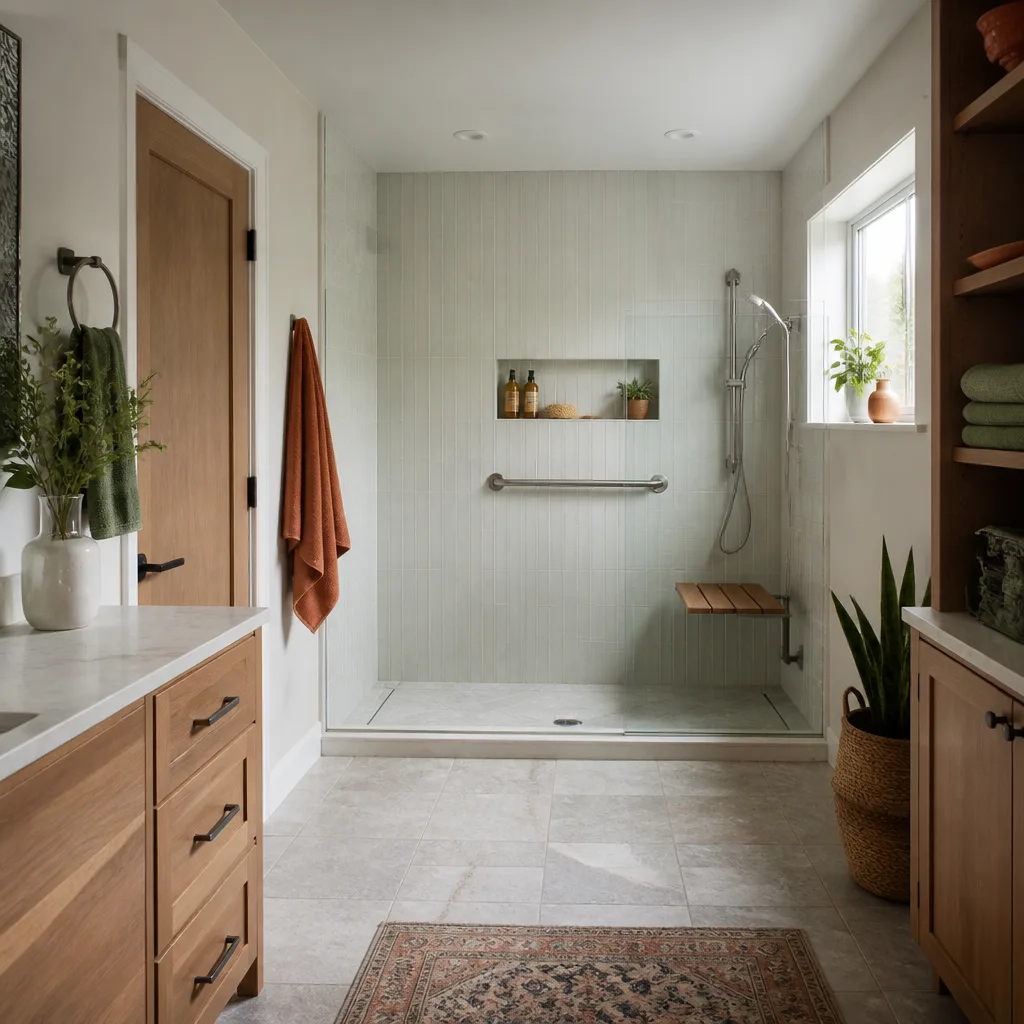
It extends independence. Stepping over a 15 – 18 inch tub wall is nothing when you’re 35. It becomes a real barrier at 65, after a knee surgery, during late pregnancy, or for a child transitioning to independent showering. A walk-in shower removes the single biggest daily fall risk in the bathroom for children and older relatives, and a built-in shower seat or grab bars make the choice even more practical.
It houses the daily reality of family life better. Families in San Francisco with small kids and pets use the bathtub less than the shower after the kids move past the toddler bathing stage. Converting frees up 10 – 15 square feet of perceived space (the tub wall visually closes off the room) and eliminates a tub that’s mostly collecting dog hair and bath toys.
It recovers value. Walk-in showers are now the default expectation in San Francisco real estate listings, not the premium upgrade they were fifteen years ago. A well-executed conversion with documented waterproofing, clean tile lines, and named-brand fixtures (Kohler, Moen, Grohe) is a selling point; a cracked, moldy tub surround is a buyer objection. When you sell, the conversion is part of what the home offers.
And one honest caveat: if you have an infant or toddler and no other bathtub in the home, think twice – or plan for a retractable shower seat and a handheld sprayer so tub-free bathing is manageable. We’ll tell you this in a site visit, because our job is to help you make the right choice for your household, not to sell you a shower you’ll regret.
Tub-to-Shower Conversion Timeline: What to Expect in San Francisco
A standard alcove conversion with no structural surprises takes 3 – 6 working days with a two-person crew. Here’s the rhythm of the job:
- Day 1 – protection and demo. Drop cloths go down before the first tool comes in. The old tub, surround, and any damaged drywall come out. The crew checks the subfloor and the drain line, and if anything unexpected shows up, that’s when you get a call and a written update on what it means for the schedule and the price.
- Day 2 – 3 – plumbing rough-in and waterproofing. Supply lines are adjusted, the shower valve goes in, the drain and P-trap are set. Waterproofing – Schluter membrane or cement board with liquid membrane – is applied and left to cure at least overnight. This step must not be rushed, and a reputable contractor won’t rush it.
- Day 4 – 5 – pan install and surround. The shower pan is set in mortar, the wall surround (tile or acrylic) goes in. If tile is going in, the grout needs a day to cure before sealing.
- Day 5 – 6 – trim, finish, and clean. Fixtures are set, glass or curtain rod installed, drywall patched, paint touched up. The crew cleans, photographs the finished work and the clean-up, and walks you through the finished shower before they leave.
Every visit includes shoe covers at the door, drop cloths on the floors, quiet tools during nap hours or school hours where possible, and a photo of the clean-up before we leave – because “the work looks good” is meaningful, but “the work looks good and the house looks like a crew was never here” is the actual job. We treat quiet hours and pet safety as part of the scheduling, not a nice-to-have. Pet-safe product choices are made wherever there’s an option.
San Francisco-Specific Considerations for Tub-to-Shower Conversions
Some details about this city genuinely change how a conversion should be done. These are things we know from doing conversions across the city, not from a national playbook.
Old Buildings, Old Floors
Victorians in Noe Valley, the Mission, and the Richmond District often have unlevel floors – an inch or more of slope over 5 feet is common in buildings that have settled for 100 years. A shower pan installed on a sloped floor will leak, no matter how carefully it’s sealed. A proper conversion includes leveling the pan area or using a self-leveling compound before the pan goes in, which adds labor but means the shower drains instead of pooling. In Russian Hill, Nob Hill, and Pacific Heights walk-ups, the same old-building realities apply, plus the stairs.
Ventilation Is Not Optional
San Francisco’s cool, damp climate and older homes with limited airflow create a real moisture problem in converted showers. Every conversion should include a properly sized bathroom exhaust fan, vented to the outside (not the attic), and it should run for at least 20 minutes after a shower. A new fan and vent run adds $150 – $400 and is one of the cheapest moves you can make to protect the new shower and the surrounding walls from mold. We include this in every conversion estimate – if your existing fan is weak or unvented, we’ll flag it and price it in the written bid rather than treat it as an “oh, by the way” later.
Access and Stairs Change the Labor
A ground-level Marina or Sunset flat is the easiest conversion; a third-floor walk-up in Cow Hollow is not. The difference shows up in labor hours and in the protection steps the crew takes. We run runners up the interior stairs, protect railings, and stage drop cloths at every landing – that’s part of the price and it’s in the written estimate up front, never billed as an add-on.
Permits and Inspections in San Francisco
The San Francisco Department of Building Inspection requires a plumbing permit when the existing tub drain is altered or when supply lines are moved. A straightforward conversion that keeps the drain in place still requires a permit if the valve is relocated or the shower enclosure changes the floor. We handle permitting in-house and the permit cost is included in your written estimate. The inspection itself is a protection for you – it means the waterproofing and the plumbing were done to a standard an inspector can verify, not just a workmanship standard the crew claims.
FAQs – Tub-to-Shower Conversion Cost
How much does a tub-to-shower conversion cost in San Francisco?
A tub-to-shower conversion in San Francisco costs $4,130 – $11,800 for a complete project in 2026, with most families paying $5,000 – $8,500 for a standard 5-foot alcove conversion with an acrylic pan and surround. Tile surrounds, valve relocations, and cast-iron drain replacement push the price toward $9,500 – $11,800. Call (831) 480-4497 for a free written estimate with exact numbers for your bathroom.
Is it cheaper to convert a tub to a shower or replace the tub?
A tub-to-shower conversion costs $4,130 – $11,800 in San Francisco, while a full tub replacement with new surround typically runs $2,500 – $6,000 when no other work is involved. A conversion is more expensive because it includes plumbing changes, a new shower pan, and waterproofing, but for most families the added cost buys exactly the shower they want rather than a tub they’ll use twice a year. We’ll show you both numbers in writing so you can decide with the real figures on the table.
How long does a tub-to-shower conversion take?
Most conversions in San Francisco take 3 – 6 working days from the first drop cloth down to the final clean-up photo. Tile surrounds add 1 – 2 days for grout curing, and unexpected subfloor or cast-iron drain repair can add 1 – 2 days. You’ll know the exact schedule before work starts, and any change to it comes to you in writing, not as a surprise at the end of the day.
Can you convert my tub to a shower the same week I call?
For most standard conversions, yes – our San Francisco crew can generally start within 3 – 7 days of a signed written estimate, depending on current scheduling. We answer the phone 24/7, so call (831) 480-4497 and you’ll talk to a live person who can check exact availability for your neighborhood, not leave a message and wait for a callback.
Does removing a bathtub hurt resale value in San Francisco?
In 2026, a walk-in shower is what San Francisco buyers expect, and a properly permitted, waterproofed conversion with a clean tile or acrylic surround is a selling point – provided the home still has at least one other bathtub. If you’re converting the only tub in a home where future buyers might have young children, we’ll talk through the trade-off honestly before you decide.
What’s the difference between an acrylic surrounded conversion and a tiled conversion in cost?
An acrylic or fiberglass surround conversion typically totals $5,000 – $7,500 in San Francisco, while a large-format tiled surround with a Schluter waterproofing system totals $8,500 – $11,800. The difference is $2,000 – $4,000 on average, driven by the membrane, the tile, the setting labor, and the curing time. Both are valid options, and we’ll show both numbers in your written estimate rather than pressuring you toward one.
Do I need a permit to convert a tub to a shower in San Francisco?
Yes, in nearly every case. A permit is required from the San Francisco Department of Building Inspection for any plumbing alteration, and any change that moves the drain, relocates the valve, or alters the wall structure will require an inspection. The permit cost range is $200 – $600 and is included in our written estimate. An unpermitted conversion may save money short-term, but it creates resale disclosure headaches and can bypass the waterproofing inspection that protects the surrounding structure.
Why Families in San Francisco Choose Elmstead Remodeling
When our crew walks into a family’s home in the Sunset or Noe Valley, there’s usually a dog, a kid napping, and a parent trying to juggle a work call. The work we do next is not about speed or flash – it’s about treating the home the way we’d treat a neighbor’s house if they’d trusted us with a key. Drop cloths go down before the tools come out. Quiet tools between 12:30 and 2:30 if there’s a toddler napping. Pet-safe products wherever there’s a choice. No one moves a framed photo or a dog bed without asking first.
We’re Elmstead Remodeling, a Cedarwell company founded in 2005 and led in San Francisco by Graham Stein. We use named-brand materials people can research and whose warranties travel with the project: Kohler, Moen, and Grohe fixtures; Schluter waterproofing systems; James Hardie backer board. Every project carries the 365-Day Done Right Promise – if it’s not done right after the job is complete, we make it right. That’s not marketing language. It’s stamped on every written estimate and honored on every job, because Graham’s name is attached to the work, and names matter more than logos.
Our home remodeling work across San Francisco includes full bathroom and kitchen remodels, general contracting, and whole-home renovations. If you’re weighing a full tub-to-shower conversion in San Francisco against other bathroom options, or just want a real number for your specific project, start with a phone call. It’s free, it’s a live person, and the written price you get is the price we honor.
Get an Exact Price for Your San Francisco Tub-to-Shower Conversion
Let us show you what this costs for your specific bathroom. Call (831) 480-4497 and you’ll talk to a live person – not a voicemail box, not an automated menu, not a “we’ll call you back” promise. Tell us about your bathroom, your building, and your family’s daily routine, and we’ll put an exact written price in your hands before any work starts. The estimate costs you nothing and commits you to nothing. What it gives you is a real number, from a real contractor, with named materials and a written promise behind it.
Written by Graham Stein, Owner at Elmstead Remodeling San Francisco, serving San Francisco families since 2005. Pricing reflects the San Francisco market as of 2026. Elmstead Remodeling San Francisco offers free estimates – call (831) 480-4497.
What Our Customers Say
"Kitchen and living room refresh. Shoes off, floors covered, cleanup every evening. They checked with us before any change. Treated our home with real care."
- Dwight Harmon"Kitchen and living room refresh. What stood out was the respect for our home, shoes off, floors covered, cleanup every evening. They checked with us before any change. Beautiful result."
- Dontae Willis"Kitchen remodel. With two kids at home I was dreading the dust, but they walled off the space in plastic and cleaned every single day. Respectful, calm crew. The kitchen is stunning."
- Beverly Austin