









Free written scope consultation - allowances, timeline, and change-order rules on paper before a single trade is scheduled
Unilock Fence Installation: The San Francisco Owner’s Guide
Unilock fence installation in San Francisco typically runs $4,130 – $10,620 installed, and most partial fence replacements we handle are completed in one to two working days once materials are on site. What starts the conversation is usually one of three things: a section of fence leaning after a winter storm, a gate that no longer closes square, or a homeowner who just finished a paver patio and wants the fence line to match the same Unilock aesthetic. Whatever opened the conversation, the question is always the same: can this be fixed without tearing out the whole run, and what will it cost before anyone shows up?
As an independent contractor, Elmstead Remodeling San Francisco is not affiliated with Unilock, but we work with their product lines regularly and know how their systems go together. If you’re staring at a failing section of fence right now, grab a tape measure and check the post-to-post spacing in the failing area before you call. That single number tells us more than any photo can.
Which Unilock Models This Applies To

Unilock’s hardscape product lines are built around modular concrete systems, and the fence work we do alongside them breaks into two categories: installing or repairing Unilock wall and post systems that support fence runs, and re-hanging or replacing standard fence panels on existing Unilock pillar or wall bases. The specific product families we see most in San Francisco backyards are the Estate Wall, Pisa, and Brussels Dimensional lines, plus the occasional U-Cara multi-piece panel wall where a homeowner wanted a more finished look.
Here’s the compatibility gotcha with Unilock specifically: their block heights are not universal across product lines. A Brussels Dimensional block is 4 inches nominal in height, while an Estate Wall block runs closer to 6 inches. If you’re replacing a single post base or a few damaged blocks, you cannot swap one line’s block for another and expect the fence rail to sit level. Measure the actual block height on site before ordering anything. A tape measure and a level will settle in two minutes what a catalog won’t tell you.
For the fence components themselves, Unilock doesn’t manufacture aluminum or wood fence panels. Their system is the structural base. The fence panels, posts, and gates are typically sourced from fence manufacturers that build to standard post spacing. We stock common Unilock block profiles and work with fence component suppliers to match existing panel dimensions. Some homeowners also carry the Unilock aesthetic into their outdoor kitchen or seating wall, and we’ve helped with those projects as well alongside our cabinet and countertop partners like KraftMaid, Cambria, and Silestone.
One more San Francisco-specific note: if your fence is pre-2000 and sits on a property line shared with a neighbor, check whether that wall or fence base was built on a shared retaining element. We see this constantly in the Sunset District and Inner Richmond, where a Unilock wall doubles as grade separation between two lots. That changes how we approach the repair, and it’s better to know before the crew arrives.
Styles & brands we work with







Signs Your Unilock Fence Installation Is Failing
- The gate drags or won’t latch. In San Francisco’s damp winter soil, the post base shifts a quarter inch and the gate geometry goes. That quarter inch is almost never the gate’s fault; it’s the post block underneath losing its seating. Tightening the gate latch only delays the fix.
- A post is leaning but the fence panel is still straight. This almost always means the concrete footing or Unilock post base below grade has been undermined by water. In San Francisco’s heavy clay soils, drainage shifts become visible in fences long before they show up anywhere else.
- Horizontal cracking along the mortar line of a Unilock wall. Mortar doesn’t crack from age alone. It cracks from movement behind it, usually drainage pressure building on the backside of a wall that wasn’t built with weep holes or aggregate backfill. The wall face tells you what’s happening behind it.
- Caps are loose or missing from pillar tops. Loose caps let water into the block core. Once water sits inside a Unilock pillar through a freeze-thaw cycle (rare in San Francisco proper but common in higher elevations around Twin Peaks and Diamond Heights), the block face spalls and the damage becomes permanent rather than replaceable.
- The fence panel has come loose from the post, or the post bracket is bent. This is the most common wind damage we repair after winter storms off the Pacific. The bracket fails before the panel does, which is a small mercy: bracket replacement is an hour of work, not a new fence run.
See the difference
 Before
 After
After Before
 After
After Before
 After
AfterReplacement Cost & What’s Included
For a typical San Francisco yard fence restoration where we’re resetting or replacing Unilock post bases and re-hanging panels, the installed range is $4,130 – $10,620. Where a project falls inside that range comes down to three things: how many post bases need to be rebuilt, whether we’re reusing the existing fence panels or pulling new ones, and whether any drainage or grading correction is needed before the posts go back in. A single leaning post with good panels around it lands near the bottom of that range. A full fence run where the whole Unilock base needs to come out and get rebuilt sits at the top.
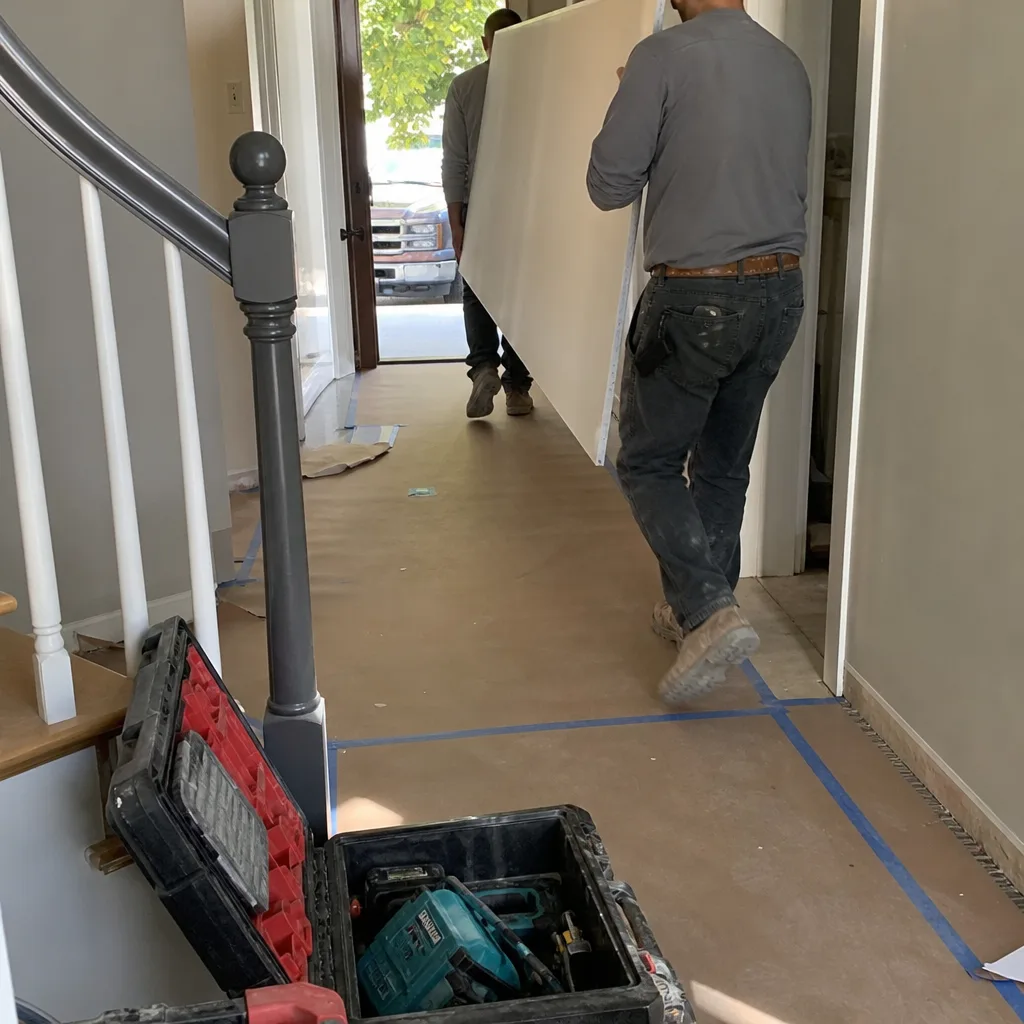
The written price we give you before any work starts includes the demolition and disposal of failed material, the new Unilock blocks and mortar, post-setting hardware, panel re-hanging or replacement panels, and the clean-up. It also includes shoe covers and drop cloths in any interior rooms we pass through. We don’t charge for those. Every project we complete falls under the 365-Day Done Right Promise: if it’s not done right after the work is complete, we make it right. That’s a named commitment on our paperwork, not a verbal one. Graham Stein writes out every cost before a single tool touches the floor, and the price you approve is the price you pay.
DIY or Call Us?
There are two things we’re glad to have a homeowner check, and neither one requires a tool belt. First, sight down the fence line and mark which post or panel looks out of alignment. Second, look at the base of any leaning post: is there pooling water after rain, exposed soil, or a visible gap at the mortar line? That information tells us where to start.
What we don’t recommend doing yourself: pulling a block out of a load-bearing Unilock wall, re-mortaring a post base, or trying to jack a fence section back into plumb. These structures are under more load than they look, and in a city where many of these walls also serve as retaining elements, pulling the wrong block can destabilize more than the fence. The work is heavy, the geometry matters, and the repair is usually faster and cheaper when it’s done once by someone who has done a few hundred of them. We’re happy to take a look at what you’re dealing with. Call (831) 480-4497 and describe what the fence is doing. If a picture helps, send it while you’re on the call.
FAQs

A properly built Unilock post base with drainage and a poured footing typically lasts 20 to 30 years in San Francisco’s climate before movement becomes visible. What shortens that lifespan is water management: walls without weep holes, downspouts that discharge at the wall base, or irrigation lines running too close. We see 10-year-old walls failing regularly for those reasons alone. If yours is showing movement, call (831) 480-4497 for a professional evaluation.
Yes, and that’s what we do most often. We replace failed posts, rebuild damaged sections of Unilock wall, re-set caps, and re-hang panels while leaving the healthy sections untouched. The key is matching the existing block profile and panel spacing, which is why we ask for measurements and photos before we give you a written price.
Most partial fence repairs we handle take one to two working days once materials are on site. Full fence runs with base reconstruction typically run three to five days depending on the length. We’ll tell you the expected timeline in your written estimate before any work is approved.
We maintain common Unilock block profiles for the product lines we install most, and we source project-specific quantities directly from Unilock distributors in San Francisco and the Bay Area. You won’t need to coordinate material ordering. It’s handled as part of your written estimate.
Written by Graham Stein, Owner, Elmstead Remodeling San Francisco at Elmstead Remodeling San Francisco, serving San Francisco and nearby areas.


