








Free written scope consultation - allowances, timeline, and change-order rules on paper before a single trade is scheduled
James Hardie Kitchen Remodeling: The San Francisco Owner’s Guide
If you’re looking into James Hardie kitchen remodeling in San Francisco, the short answer is this: we spec and install James Hardie siding, trim, and backer board as part of full kitchen remodels, and a complete project in the city typically runs $16,520 to $53,100 depending on scope, layby, and what’s behind the existing walls. Most homeowners don’t come to us because their James Hardie product “failed” in the traditional sense. They come because the kitchen around it did. A window over the sink rotted the framing behind the HardiePlank, a dishwasher leak wicked into the subfloor below HardieBacker, or someone cut the siding wrong when a previous contractor added an exhaust vent and now water gets through the gap. The Hardie product itself is usually fine. The installation details around it are what determine whether a San Francisco kitchen stays dry through ten fog seasons.
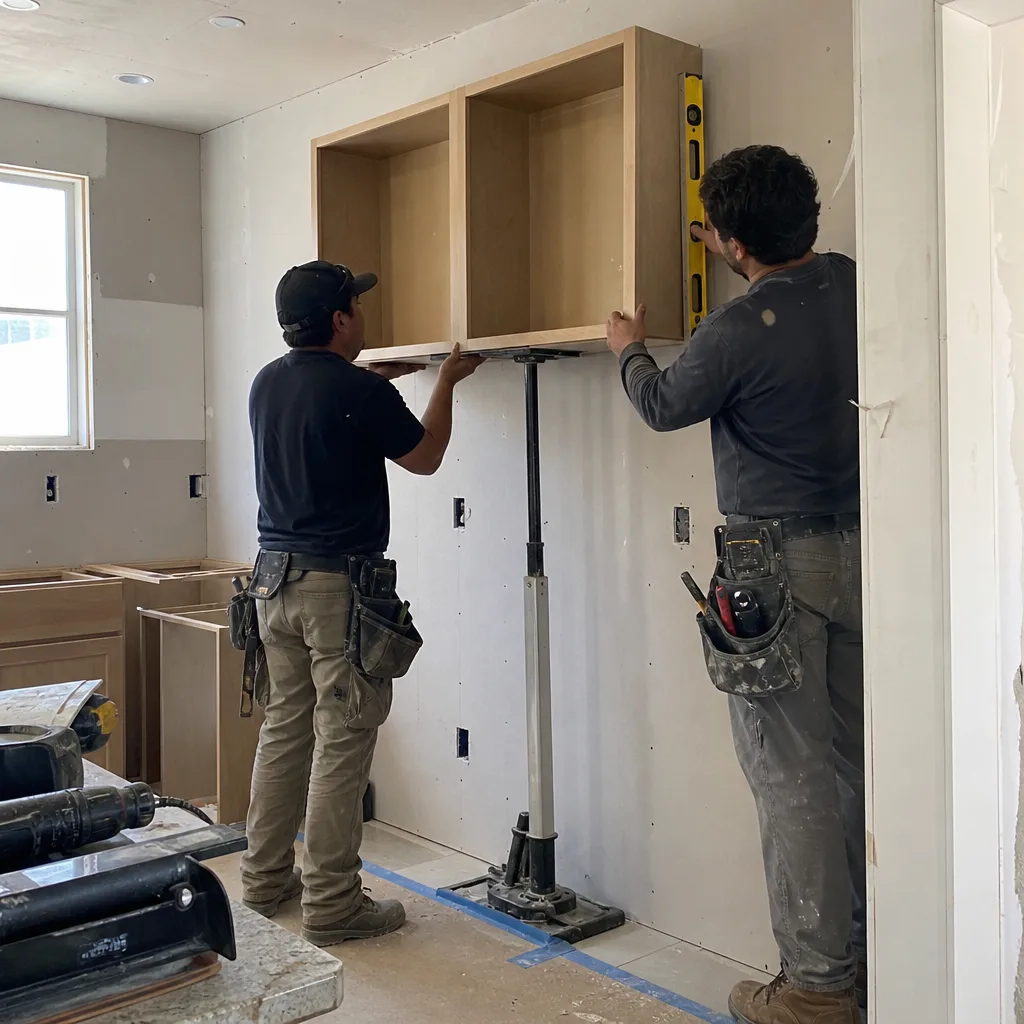
Elmstead Remodeling San Francisco is an independent remodeling contractor. We are not affiliated with James Hardie, but we install their products because the specs hold up in our climate, and because their warranty language is something we can hand a homeowner without needing to translate it.
Which James Hardie Models This Applies To

In a kitchen context, you’re almost always dealing with two James Hardie product families: HardieBacker cement board (the 1/4″ and 1/2″ panels used behind tile backsplashes and under tile floors) and HardiePlank lap siding with HardieTrim boards (used on the exterior wall of the kitchen, especially on bump-outs, breakfast nooks, and rear additions common in San Francisco’s Sunset, Richmond, and Bernal Heights homes). They are not interchangeable. HardieBacker is a tile substrate. HardiePlank is an exterior cladding. We’ve met the confusion often enough that we now ask every homeowner to send a photo of the product label before we schedule the walkthrough.
Here’s the compatibility gotcha most people don’t know: HardieBacker 500 is the 1/2″ board rated for both walls and floors over 16″ on-center framing. HardieBacker 250 is the 1/4″ board rated for walls and countertops only, never floors. If someone installed 1/4″ board on a kitchen floor because it was cheaper, the grout lines crack within two years and the floor flexes under a refrigerator. We see it in older flips throughout the Mission and Excelsior. The fix is a proper substrate replacement before new tile goes down, and that’s a line item we write into the estimate the first time.
For HardiePlank on an exterior kitchen wall, the key spec is the 6-1/4″ exposure for the 8-1/4″ lap siding, and the requirement that butt joints fall on studs with a 1/8″ gap caulked, not tight. In San Francisco’s wet winter cycle, tight butt joints wick water behind the plank and rot the sheathing. That’s the number one failure point we repair on kitchen bump-outs.
Styles & brands we work with







Signs Your James Hardie Kitchen Remodeling Is Failing
- Grout cracks spreading inward from the sink wall. The HardieBacker underneath is moving, which usually means it wasn’t bedded in thin-set, was attached with the wrong screw spacing, or the floor framing below has a soft joist from a past leak.
- Water staining on the ceiling below a second-floor kitchen. In San Francisco, this is frequently a failed wax ring under the dishwasher line or a slow supply leak at the cabinet kick. The HardieBacker wicks water sideways, and the stain shows up three feet from the source.
- Exterior siding swelling or rippling around the range hood vent. HardiePlank doesn’t swell like wood, but if the vent boot wasn’t flashed correctly, water gets behind it and pushes the plank outward. The plank looks wavy from the outside.
- Condensation or mustiness inside the cabinet under the window. This is a flashing failure between the HardiePlank and the window trim. In San Francisco’s summer fog cycle, that gap pulls moisture inside for months at a time before you ever see a stain.
- Tile sounding hollow when tapped over the sink backsplash area. The HardieBacker has delaminated from the wall behind it. The tile is still suspended, but it’s no longer bonded. It will crack when a pan handle clips it.
See the difference
 Before
 After
After Before
 After
After Before
 After
AfterReplacement Cost & What’s Included

A full kitchen remodel in San Francisco with James Hardie products in the build runs $16,520 to $53,100. A small galley kitchen in a Marina or Noe Valley flat will land toward the lower end. A larger kitchen with a new HardiePlank-clad bump-out, HardieBacker floor substrate, and custom cabinet work will push toward the upper end. For isolated component work: cabinet installation alone runs $4,720 to $15,340, countertop installation $2,360 to $7,670, and backsplash installation $945 to $2,950.
Every number we write includes the same things: the materials with part numbers, the labor, the dump hauling, and the clean-up. We write the price before any work starts, and it doesn’t change unless you change the scope. The 365-Day Done Right Promise covers the finished project. If the tile cracks at a seam or the siding shifts after year one, we come back and make it right.
DIY or Call Us?
There are some things a careful homeowner can check: whether the exterior plank butts have visible caulk, whether the tile grout lines are uniform, whether the range hood vent louver opens and closes. Those are inspection tasks. The dangerous parts are the same tasks we treat as professional work: cutting fiber cement board produces silica dust that needs proper capture, lifting a slab of HardieBacker 500 off a wet bed is a two-person lift, and opening an exterior kitchen wall in San Francisco often means finding knob-and-tube or failed flashing behind it. We’d rather you call us before the wall is open than after. Graham Stein, who leads our San Francisco team, learned the trade at Los Angeles Trade-Technical College and has spent three decades managing crews across California. He’s been in enough Sunset District kitchens to know what a 1930s wall cavity looks like, and it isn’t something to discover on a Saturday morning.
If you want someone to look at the wall before you decide, call (831) 480-4497. We’ll come out, look, and tell you what we’d do. The estimate is free.
FAQs
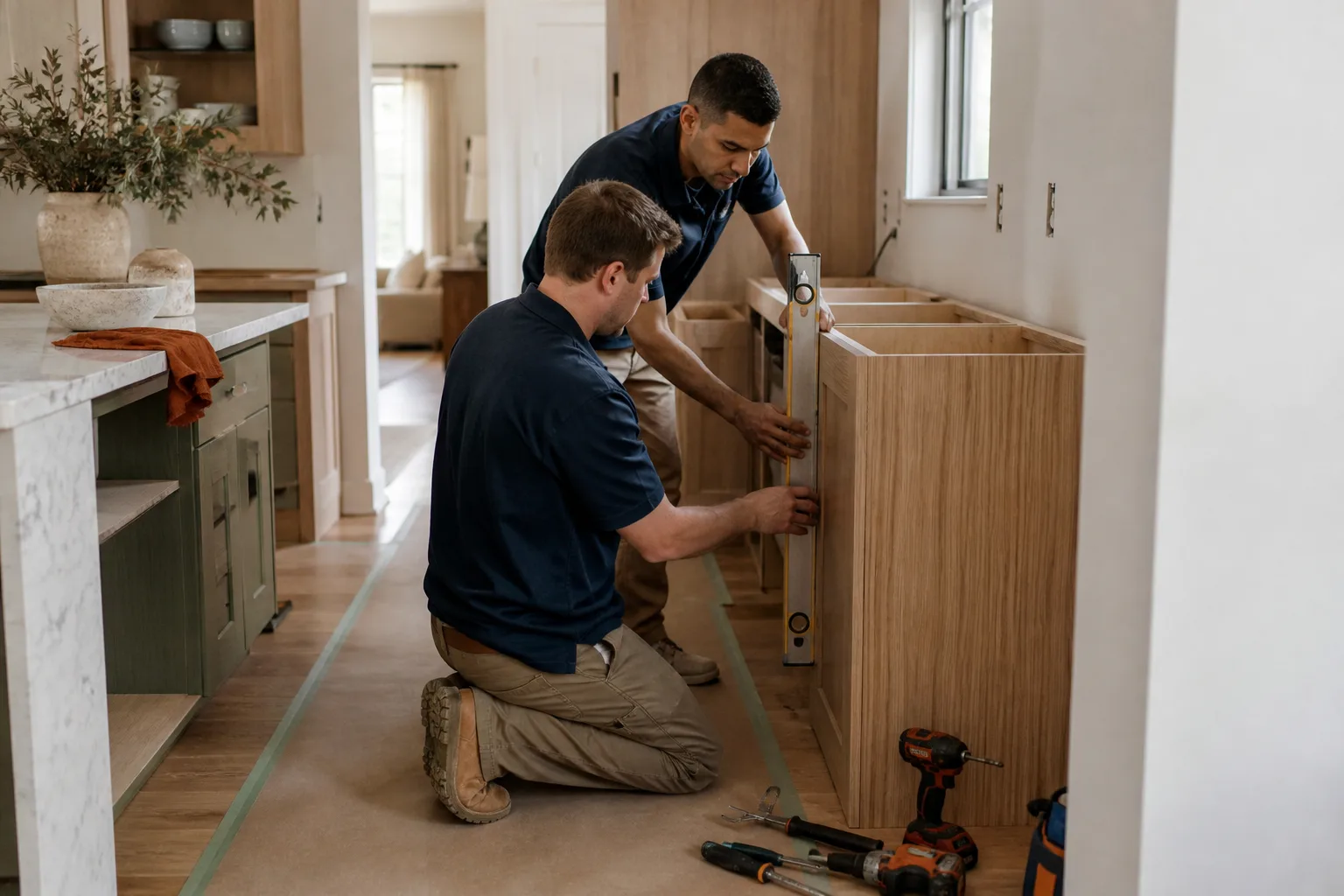
When installed to spec, HardieBacker and HardiePlank will outlast the tile, the cabinets, and often the roof above them. The material itself has a 30-year limited transferable warranty when installed per James Hardie’s written instructions, and in our experience the failures are almost always installation errors or water intrusion from another part of the kitchen, not product degradation.
Yes, in many cases an isolated plank or trim board can be removed and replaced without touching the rest of the kitchen wall. If the flashing behind it is the problem, the repair is more involved because we have to open the wall anyway. Call (831) 480-4497 and we’ll tell you which one you have before quoting anything.
A full kitchen remodel in San Francisco typically runs four to eight weeks from the first day of demo to the final walkthrough. Component replacements like a backsplash or a siding repair are usually two or three days. We’ll give you a written schedule with the written price, so you know which weeks the kitchen is down and which weeks you can cook.
We keep common HardieBacker 500 and HardiePlank 8-1/4″ lap siding in our San Francisco inventory, along with the matching trim and the correct screws and flashing materials. Uncommon sizes and custom colors are ordered per project and arrive within a week. If your kitchen uses an older Hardie product, send us a photo and we’ll match it before the crew arrives.
Written by Graham Stein, Owner, Elmstead Remodeling San Francisco at Elmstead Remodeling San Francisco, serving San Francisco and nearby areas.


