






Free written scope consultation - allowances, timeline, and change-order rules on paper before a single trade is scheduled
James Hardie Bathroom Remodeling: The San Francisco Owner’s Guide
If your San Francisco bathroom was built or remodeled with James Hardie backer board, fiber cement panels, or HardieBacker under tile, and you’re seeing cracked grout, soft spots, or failing surfaces, the fix usually comes down to proper substrate replacement, not just patching what’s on top. A full James Hardie-specific bathroom remodel in San Francisco typically runs $10,620 to $33,040, depending on bathroom size, whether we’re pulling the old substrate down to studs, and what fixtures you’re matching to the new surface. Most owners discover the failure the same way: a tile pops loose in the shower, water has been getting behind it, and the HardieBacker underneath has been doing exactly what it’s supposed to do for years, until it couldn’t anymore.
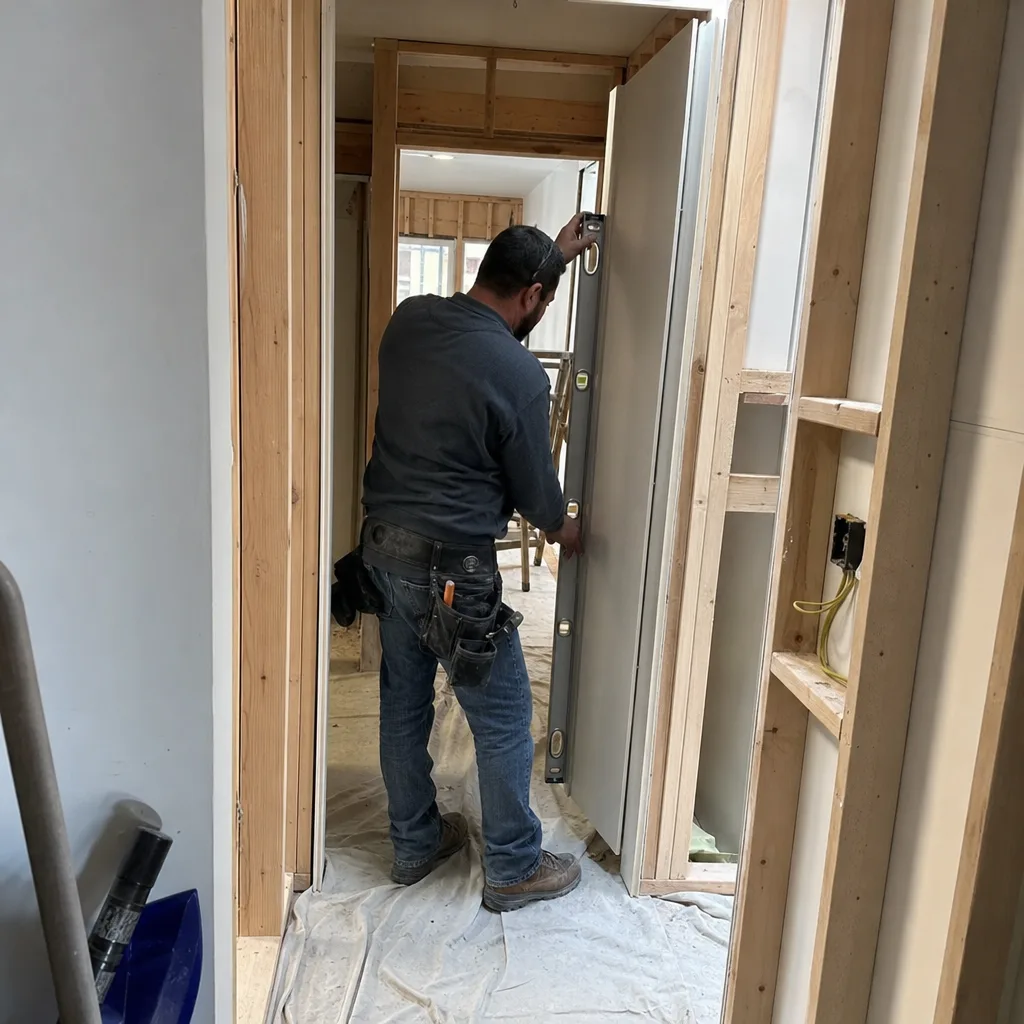
We’re an independent San Francisco remodeling contractor, not affiliated with James Hardie. But we spec and install their boards by name because the manufacturer warranty travels with the finished job, and because we’ve pulled enough failed generic substrates out of Bay Area bathrooms to know the difference.
Which James Hardie Models This Applies To

In bathrooms, the James Hardie product you’re almost certainly dealing with is HardieBacker 1/4″ cement board or HardieBacker 500 (1/2″), used as the tile substrate on walls, shower surrounds, and sometimes floors. The 500 series carries the heavier point-load rating and is what we use for shower walls and bathroom floors with larger-format tile. The 1/4″ board is for walls only, never for floors despite what some handyman jobs might have done.
The compatibility gotcha most San Francisco homeowners run into: HardieBacker is not waterproof by itself. It’s water-durable, which is different. In a wet area like a shower or tub surround, the board must be paired with a waterproofing membrane or a moisture barrier behind it, otherwise San Francisco’s humidity and coastal moisture will eventually find the seams. We regularly open up bathrooms in the Sunset District and Richmond where HardieBacker was installed directly against studs in a shower with no barrier, and the board held up while the wood behind it turned to sponge.
For identification: HardieBacker panels are stamped with the product name on the board face. Edges are square and the board has a distinct gray, cement-fiber appearance with a subtle grid pattern for fastener placement. If you’re not sure what’s under your tile, take a photo of an exposed edge near the valve or plumbing access and we can usually identify it from that.
On the OEM-versus-aftermarket question: for James Hardie boards specifically, we don’t substitute. The dimensional stability and the Alkali Resistant rating on HardieBacker are tied to the tile warranty and the mortar bond. Aftermarket cement boards exist, and some are fine for dry applications, but in a San Francisco bathroom where moisture is the enemy that never rests, the named board is the one we stand behind.
Styles & brands we work with







Signs Your James Hardie Bathroom Remodeling Is Failing
- Grout cracking in a grid pattern that follows the board seams. HardieBacker expands and contracts at a different rate than generic backer boards, and when it’s installed without the proper alkali-resistant fiberglass tape at the seams, the movement telegraphs straight through the tile. This is the earliest warning sign we see in San Francisco bathrooms.
- Soft or spongy spots on the bathroom floor near the tub or shower. This usually means water has been penetrating for months or years, and the substrate below the tile has absorbed enough moisture to lose structural integrity. By the time you can feel it with a foot, the fix is a full pull-and-replace, not a patch job.
- Loose tiles that pop off with the mortar still attached to the back. When the HardieBacker itself has reached its saturation limit, the mechanical bond between mortar and board fails before the mortar-to-tile bond does. That’s the tile coming off with the mortar attached, which tells us the board underneath is done.
- Efflorescence or mineral staining at the base of the shower. That white, chalky deposit isn’t soap scum. It’s minerals being carried through the cement board by water, and it means moisture has a path through the substrate. In San Francisco’s hard water, this staining tends to show up faster than it would elsewhere.
- Musty smell that comes back a week after cleaning. The smell is organic material, which means water is pooling somewhere you can’t see, and the only place it can pool in a HardieBacker system is behind the board, in the stud cavities, or in the floor assembly. By the time there’s a smell, there’s a moisture problem worth opening the wall for.
Replacement Cost & What’s Included

For a James Hardie-specific bathroom remodel in San Francisco, the installed range is $10,620 to $33,040. Here’s what moves the number:
- Bathroom size: A compact 5’x7′ hall bath in a Sunset District or Richmond District home lands at the lower end. A master bath with a walk-in shower, double vanity, and separate tub pushes toward the top.
- What we’re pulling out: If it’s just the tile and HardieBacker coming off the studs, that’s a faster job. If the studs behind the board show rot from years of moisture, that framing repair is additional work we’ll document with photos before we proceed.
- What’s going back in: HardieBacker 500 for shower walls and floors, a waterproof membrane at every seam and change of plane, alkali-resistant tape at all seams, and your chosen tile from brands we stock like KraftMaid, Cambria, and Silestone for the vanity and countertop side of the room.
Every job includes a written line-item price before work starts. Not an estimate that drifts after the crew arrives. Not a range we narrow later. The number you sign is the number on the final invoice, unless you ask us to add scope. Every materials cost is itemized by brand and model, so you can look up the James Hardie warranty and know exactly what’s on your wall.
The workmanship is covered by our 365-Day Done Right Promise. If it’s not done right after the job is complete, we make it right. That’s stamped on every project, not buried in fine print.
See the difference
 Before
 After
After Before
 After
After Before
 After
AfterDIY or Call Us?
There are a few things you can safely check on your own. Turn off the water, remove the escutcheon plate from the shower valve, and look at the exposed edge of the substrate. If the board is crumbly, dark, or swollen, take a photo and send it to us. You can also tap the tile in a grid pattern with the handle of a screwdriver; a hollow “thud” versus a solid “click” tells you where the bond has failed. None of that requires tools beyond a screwdriver and a phone.
What you should not do is start pulling tile off a shower wall to “see what’s underneath.” HardieBacker in a wet area that’s reached the end of its life usually means the framing behind it has been wet, and you don’t want to open that, release a decade of moisture into the room, and then live with it while you figure out next steps. There’s no spring under tension here and no electrical hazard, so it’s not a dangerous DIY job the way a garage door spring is. But it’s a job where the wrong guess costs more than the right phone call. And the call is free.
Call (831) 480-4497 and tell me what the room needs to do, and we’ll figure out the rest from there.
FAQs

Installed correctly with proper waterproofing and seam treatment, HardieBacker will outlast the tile on top of it, which in a San Francisco bathroom typically means 20 to 30-plus years before the first significant grout or tile failure. Installed without a moisture barrier, it can start telegraphing problems in as little as 5 to 7 years in the Sunset District and Richmond, where fog and coastal moisture are a daily reality. Call (831) 480-4497 and we’ll help you figure out which situation you’re in.
If the failure is contained to one wall section and the surrounding board is dry and sound, yes, a localized repair is sometimes possible. What we’ve seen in San Francisco is that by the time a homeowner notices loose tile or cracking grout, the moisture has traveled further than the visible damage, and the honest fix is usually a full substrate replacement. Call (831) 480-4497 for a written assessment, and we’ll show you photos of what we find before we recommend a path.
A standard hall bathroom remodel with HardieBacker substrate replacement, new tile, and updated fixtures typically takes 10 to 14 working days from demo to final grout and clean-up. Master baths with walk-in showers and custom tile work run 3 to 4 weeks. We set quiet hours for any power tools around your family’s sleep schedule, and we check with you before we move anything in the room.
Our crews keep HardieBacker 1/4″ and HardieBacker 500 on the truck for most bathroom jobs, along with the alkali-resistant seam tape, fasteners, and waterproofing membrane we use with it. For larger jobs or specific tile orders, we order ahead so the materials are on site the day we start. Call (831) 480-4497 and we’ll tell you exactly what’s in stock for your project.
Get a Written Price Before Any Work Starts
If your San Francisco bathroom has a failing substrate, loose tile, or water damage behind the surface, call (831) 480-4497 to schedule a free estimate. You’ll get a written, line-item price before any work begins. Shoe covers and drop cloths go down on every visit. A photo of the clean-up comes before the crew leaves. And a live person answers the phone, day or night. That’s the Cedarwell Care Promise, and it applies to every Elmstead Remodeling San Francisco project, from a tub surround in the Richmond to a master bath near Dolores Park.
Written by Graham Stein, Owner, Elmstead Remodeling San Francisco at Elmstead Remodeling San Francisco, serving San Francisco and nearby areas.


