









Free written scope consultation - allowances, timeline, and change-order rules on paper before a single trade is scheduled
CGI Windows & Doors: The San Francisco Owner’s Guide
We replace and install CGI windows and doors throughout San Francisco, and we stock the parts that fail most often: roller assemblies, locking mechanisms, weatherstripping, hinge kits, and balance springs. Most CGI-compatible window and door part replacements in San Francisco run between $470 and $2,950 installed, depending on the component and whether we’re working with an OEM part or a quality aftermarket equivalent. When an owner calls us about a CGI product, it’s usually because a window has started sagging in its track, a patio door won’t lock cleanly, or fog has appeared between the panes of an insulated glass unit. The phone call often starts with “it’s probably nothing,” and by the time we arrive, the part has usually been failing for months.
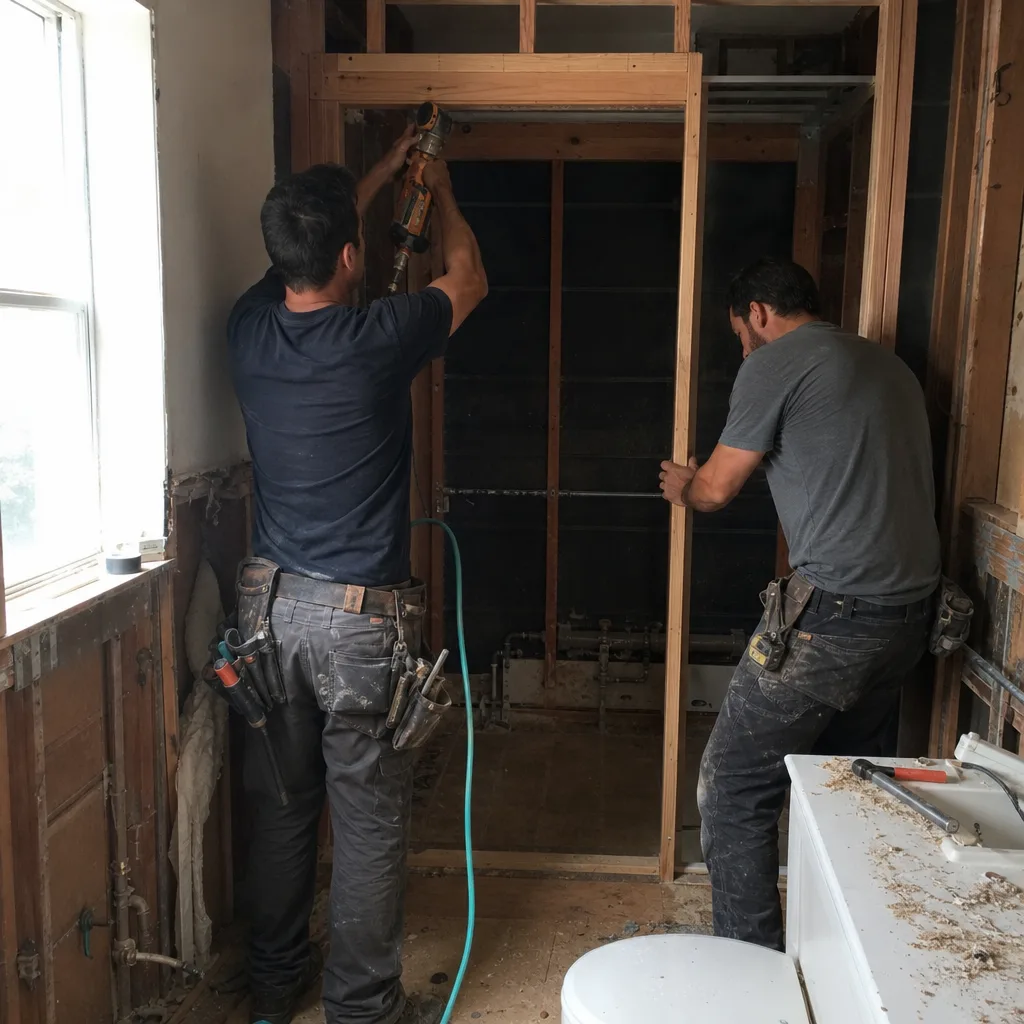
We’re an independent San Francisco remodeling and repair contractor, not affiliated with CGI. That means we can source the correct part without being tied to a single supply chain, and we’ll tell you honestly when a less expensive aftermarket part will perform as well as the OEM component. Graham Stein, our owner, has spent years matching window and door hardware to the houses of San Francisco, where salt air in the Sunset District and Richmond neighborhoods tends to corrode hardware faster than homeowners expect, and where older Victorian frames settle in ways that put stress on modern window systems.
Which CGI Models This Applies To

CGI manufactures impact-rated and non-impact windows and doors across several product lines, and the part you need depends on which line is installed in your home. The most common CGI series we see in San Francisco homes include the Estate Collection, the Classic Collection, and the Targa series, each with different hardware profiles and glass packaging. Before you order anything from anyone, check the label: CGI stamps a product identification number on the frame edge, usually on the hinge side or the head of the frame. That number tells us the series, the glass package, and the hardware revision, and it’s the single best piece of information you can bring to a parts conversation.
Here’s the compatibility gotcha that catches people: CGI hardware revisions changed at several points over the last two decades, and a roller assembly from a 2012 Classic window will not necessarily fit a 2019 Classic window of the same nominal size. The extrusions look nearly identical, but the roller housing depth shifted. For most CGI products, we recommend OEM parts when the component affects the structural performance rating of the window or door, which matters if you’re counting on impact resistance. For non-structural wear items like weatherstripping and glide buttons, a quality aftermarket part is often the better value and installs identically.
Key Takeaways:
- Find the CGI product ID on the frame before calling anyone for parts.
- Series matters more than size; same-size parts across different series often don’t interchange.
- OEM makes sense for impact-rated components; aftermarket works well for wear items.
- We stock the most common CGI-compatible parts in our San Francisco service vehicles.
Styles & brands we work with







Signs Your CGI Windows & Doors Is Failing
Most CGI window and door failures announce themselves quietly before they become obvious. Here are the five symptoms we see most often in San Francisco homes, each with the underlying cause.
- The window tilts or sags when you open it. This almost always points to a worn roller assembly or a cracked roller housing. CGI windows are heavy, and years of operation along a track that’s slightly out of level will chew through rollers faster than the manufacturer’s average lifespan suggests.
- The door or window locks, but you have to lift or push to get it to engage. That’s usually frame settlement or hinge wear. In older San Francisco homes, the weight of a settled wall shifts the frame just enough to throw the strike plate out of alignment, and the hardware takes the punishment.
- Condensation or fog appears between the glass panes. The insulated glass unit seal has failed. Once the desiccant inside the spacer is saturated, you can’t dry it out. The fix is a new IGU, and with CGI products, that means matching the original glass package if you want to preserve the performance rating.
- The sliding door feels heavier each month. Debris builds up in the track, and once the rollers are grinding through grit, they wear flat. San Francisco fog and coastal moisture turn that grit into a grinding paste that accelerates the damage.
- You can feel air movement around a closed window or door. Weatherstripping has compressed or torn. On CGI products, the weatherstripping is often a replaceable insert, and swapping it is one of the most cost-effective repairs we do.
See the difference
 Before
 After
After Before
 After
After Before
 After
AfterReplacement Cost & What’s Included
Written prices before work starts are how we operate, so here are the San Francisco ranges for the CGI-compatible work we do most often. A single roller assembly replacement typically runs $470 to $1,180. A new locking mechanism or multi-point lock set runs $590 to $2,125. Replacing a failed insulated glass unit in a CGI window or door runs $1,180 to $2,950, depending on glass package and size. If the whole window or patio door needs to be replaced rather than repaired, budget $5,310 to $17,700 for window replacement and more for full impact-rated systems.
Every quote includes the part itself, the labor to install it, and the clean-up. You’ll see the part cost and the labor cost separately on your written quote, because hiding the split doesn’t help anyone. Our work is covered by our 365-Day Done Right Promise: if something isn’t right after we leave, we come back and make it right. The crew arrives in shoe covers, puts down drop cloths, and takes a photo of the cleaned-up work area before we go.
DIY or Call Us?
Some things are safe to check on your own: cleaning the track, inspecting the weatherstripping for visible tears, and confirming whether the window is square in its frame by measuring diagonals. Those checks cost nothing and they help you describe the problem accurately when you call.
But any part that involves glass handling, spring tension, or a multi-point lock mechanism deserves a trained hand. Windows and doors that size are heavy, and a broken tension spring or a mishandled IGU can cause serious injury. The CGI parts we stock on the truck are installed by technicians who do this every week. If you’re not sure whether your situation is a DIY job or not, call us at (831) 480-4497 and describe what the window or door is doing. We’ll tell you honestly whether it’s a track cleaning or a parts replacement, and the estimate is free.
FAQs

CGI windows and doors typically last 20 to 30 years in San Francisco, but hardware components like rollers, locks, and weatherstripping commonly need replacement at the 8-to-12-year mark. Coastal moisture in neighborhoods like the Sunset and Richmond accelerates corrosion on exposed metal hardware, so homes closer to the ocean often need earlier hardware service than homes in the Mission or Noe Valley. Call (831) 480-4497 for a free estimate on any CGI part replacement.
Some parts can be repaired, some cannot. Bent frames and stripped locking mechanisms can sometimes be corrected, but a failed IGU seal or a cracked roller housing generally requires a replacement part. We’ll always tell you which side of that line your part falls on, and we’ll show you the old part after we remove it. Call (831) 480-4497 and we’ll walk through what you’re seeing.
Most single-part replacements, like a roller assembly or a locking mechanism, take 1 to 2 hours on site. A failed insulated glass unit typically takes 1 to 2 weeks because the new IGU is fabricated to match the original CGI glass package, then we schedule the installation once it arrives. Call (831) 480-4497 for a specific timeline on your part.
We stock the most common CGI-compatible wear parts in our San Francisco service vehicles: roller assemblies, hinge kits, weatherstripping, glide buttons, and standard locking components. Less common parts, and custom insulated glass units, are ordered to match your product ID and typically arrive within 1 to 2 weeks. We also stock parts for KraftMaid, Cambria, and Silestone products for our remodeling work, but the focus of this page is CGI windows and doors. Call (831) 480-4497 with your product ID handy and we’ll tell you what’s in stock.
Written by Graham Stein, Owner, Elmstead Remodeling San Francisco at Elmstead Remodeling San Francisco, serving San Francisco and nearby areas.


