









Free written scope consultation - allowances, timeline, and change-order rules on paper before a single trade is scheduled
Dvele Roofing: The San Francisco Owner’s Guide
Dvele roofing replacement in San Francisco typically runs $9,440 to $23,600 installed, and because Dvele homes use a specific panel-and-seam system rather than standard dimensional shingles, the work requires matching both the material profile and the original fastening pattern. We stock the common Dvele-compatible roofing profiles and can have the rest within a week. Most owners discover a problem the same way: a damp spot on the ceiling after a heavy Pacific storm, a visible seam lifting along the roofline, or a small drip near the ridge vent that wasn’t there last winter.
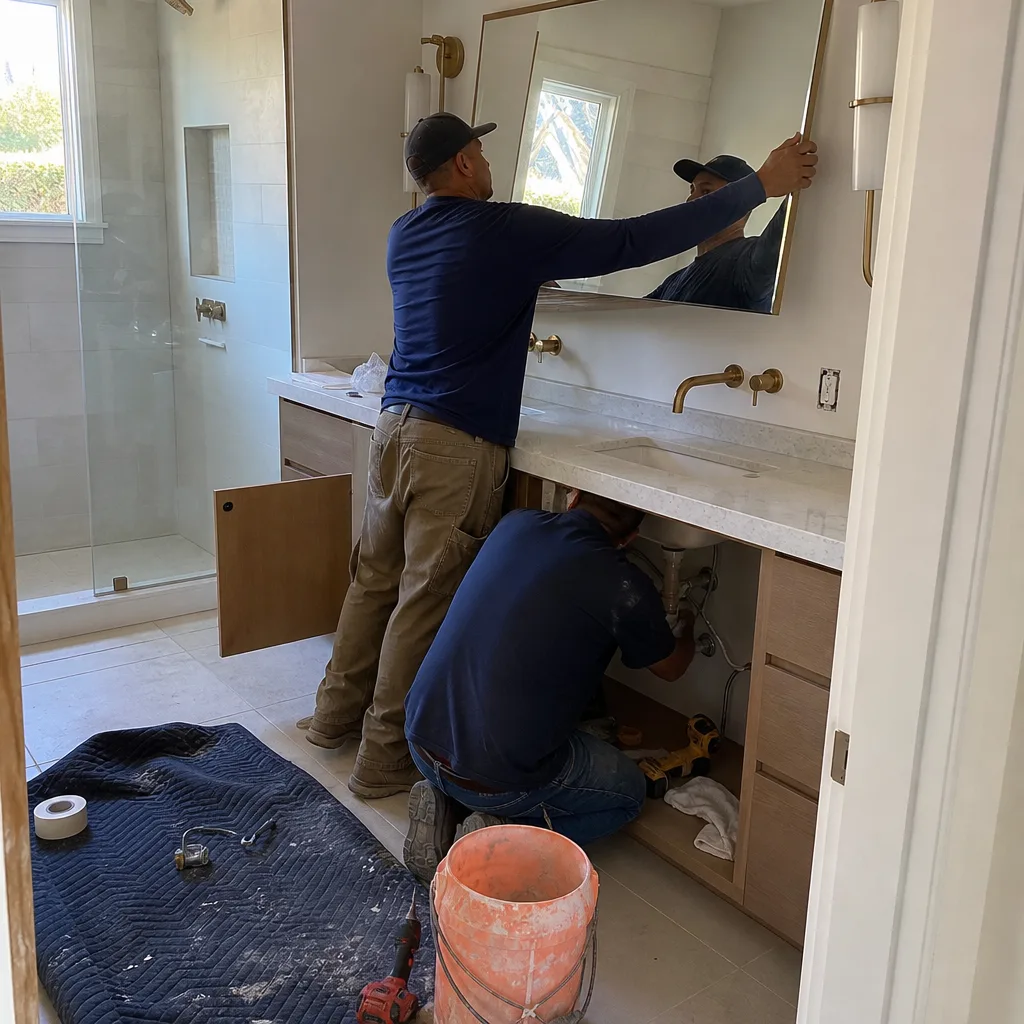
Graham Stein has walked enough San Francisco roofs to know that what looks like a single failed panel is often a sign that several seams have begun to separate. We don’t patch and hope. We open the affected section, check the underlayment and fasteners, and tell you honestly whether you need a repair or a replacement. The written price comes before any work starts, and the 365-Day Done Right Promise means if it isn’t right after we finish, we come back and make it right.
Which Dvele Models This Applies To

Dvele builds homes with a metal standing-seam roofing system across their current model lines, with panel widths and seam profiles that differ from what you’d find on a conventional San Francisco remodel. The homes coming out of the Dvele factory in Loma Linda use a concealed-fastener panel system, and the specific panel gauge and seam height depend on the home’s build year and which factory line produced it. If you’re unsure which system your home has, check the documentation packet from your purchase, or look in the mechanical room for a build-spec sheet. The panel profile stamp is usually embossed on the underside of an exposed panel edge, visible from the eave on a clear day.
The honest truth about Dvele roofing parts: there is no broad aftermarket for the exact OEM panel, because Dvele’s panel dimensions are specific to their building system. What we do is source panels from manufacturers who produce the same gauge, seam height, and coating spec, then match the profile so the seam lines stay consistent across the roof. For owners in San Francisco, that means you don’t need to wait for a factory shipment from Southern California every time a panel gets damaged. We keep the common profiles in our local inventory, and the written quote will always tell you whether we’re installing OEM-spec panels or a matched equivalent, with the price difference stated plainly.
Styles & brands we work with







Signs Your Dvele Roofing Is Failing
- Water staining on ceilings or walls after rain – this usually means a seam has separated or a fastener has backed out, letting water travel along the panel channel before it finds a gap in the underlayment. San Francisco’s wind-driven rain pushes water sideways, so a leak that only appears during storms with heavy gusts points to a seam issue rather than a panel puncture.
- Visible seam separation along the roofline – Dvele panels lock together at the seams, and when the locking channel loses tension, you’ll see a slight gap or an uneven line from the ground. This is the earliest warning sign and the cheapest to address, before water gets underneath.
- Loose or missing fasteners at the panel edges – the concealed fastener system means you shouldn’t see screws on a properly installed Dvele roof. If you spot exposed fasteners, backing out or rusting, the panel has shifted. Coastal salt air in San Francisco accelerates rust on exposed metal hardware.
- Rust streaks or oxidation on the panel surface – Dvele panels have a protective coating, but once the coating is scratched or worn, the metal underneath can begin to oxidize. Fog-heavy neighborhoods like the Sunset and Richmond Districts see this sooner than inland neighborhoods, because the damp marine layer sits on the roof for hours each morning.
- Dents or creases from fallen branches or debris – a dented panel may still shed water for a while, but the crease weakens the metal and eventually cracks at the bend point. The mature trees in neighborhoods like Noe Valley and Glen Park mean this is a more common call than most homeowners expect.
See the difference
 Before
 After
After Before
 After
After Before
 After
AfterReplacement Cost & What’s Included

Dvele roofing replacement in San Francisco runs $9,440 to $23,600 for a full tear-off and new panel installation, with roof repair work priced from $470 to $2,125 depending on how many panels are compromised and whether the underlayment needs section replacement. The spread comes down to panel count, roof pitch, and how much of the underlayment has to come up. A small section repair on a single-story home might run under $1,000, while full replacement on a two-story Dvele with steep roof planes lands at the top of the range.
Every quote includes the panels, the fasteners, the underlayment, the labor, and the haul-away. We write it out line by line before any work begins, and the price does not change once the crew arrives. The 365-Day Done Right Promise covers the completed roof work, so if a seam opens or a panel shifts within the year, we’re back at no charge. For families in San Francisco, the written price matters because it means a roof replacement doesn’t turn into a conversation about surprise costs halfway through.
DIY or Call Us?
Standing-seam metal roofing is not a safe DIY project. The panels are heavy, the roof pitch on most Dvele homes is steep enough to be dangerous without proper fall protection, and the concealed-fastener system means a panel that isn’t seated correctly at the seam will leak regardless of how carefully it’s placed. A homeowner can safely inspect from the ground with binoculars, checking for visible seam separation, exposed fasteners, or rust streaks. That’s worth doing once a year, especially before the winter rain season. But if you see any of those signs, do not climb onto the roof. The risk isn’t just the fall; it’s that a partially-disengaged panel can release stored tension while you’re standing on it.
Call us at (831) 480-4497 and we’ll send someone who has worked on Dvele roofing in San Francisco before. Graham Stein will tell you the same thing he tells every homeowner: we’d rather inspect it and tell you it’s fine than have you find out the hard way that it isn’t.
FAQs

Dvele’s standing-seam metal roofing is built to last 40 to 50 years, but San Francisco’s salt air, fog, and wet-dry cycles mean the underlayment and fasteners typically need attention around the 20-year mark, even when the panels themselves are still sound. Call (831) 480-4497 for an inspection if your roof is approaching that age, especially if you live in a fog-exposed neighborhood.
A panel with a small dent or a minor scratch can often be repaired with a factory-matched coating treatment, but a panel with a cracked seam or a failed fastener channel should be replaced, because the structural integrity of the locking mechanism is gone. The honest answer is that repairing a seam that has already lost tension is a temporary fix at best, and San Francisco’s winter storms will find it again.
A section repair typically takes one day, while a full replacement on a Dvele home in San Francisco runs three to five working days depending on roof size and weather, with the crew keeping the site clean and respecting quiet hours during the work. We leave the property cleaned up, with a photo of the finished roof before we go.
We keep the most common Dvele-compatible panel profiles in stock in San Francisco, so most repairs can start right away, and panels we don’t carry locally are typically in hand within a week. Call (831) 480-4497 and we’ll tell you over the phone whether your panel profile is something we have on the truck or something we need to order.
Written by Graham Stein, Owner, Elmstead Remodeling San Francisco at Elmstead Remodeling San Francisco, serving San Francisco and nearby areas.


