









Free written scope consultation - allowances, timeline, and change-order rules on paper before a single trade is scheduled
Quikrete Home Additions & ADU: The San Francisco Owner’s Guide
If you’re planning a home addition or an ADU in San Francisco using Quikrete products, you’re looking at an installed range of $53,100 to $153,400 for a home addition, and $106,200 to $259,600 for a full ADU build. We work with Quikrete concrete, mortar, and stucco products on these projects every season, and we know exactly how they behave in San Francisco’s marine layer, fog, and seismic conditions. Most owners reach out once they have plans drawn and want a written price before any concrete goes into the ground. If you’ve already got a Quikrete product failing on an existing addition, you’re probably seeing spalling, cracking, or moisture wicking through a stem wall.
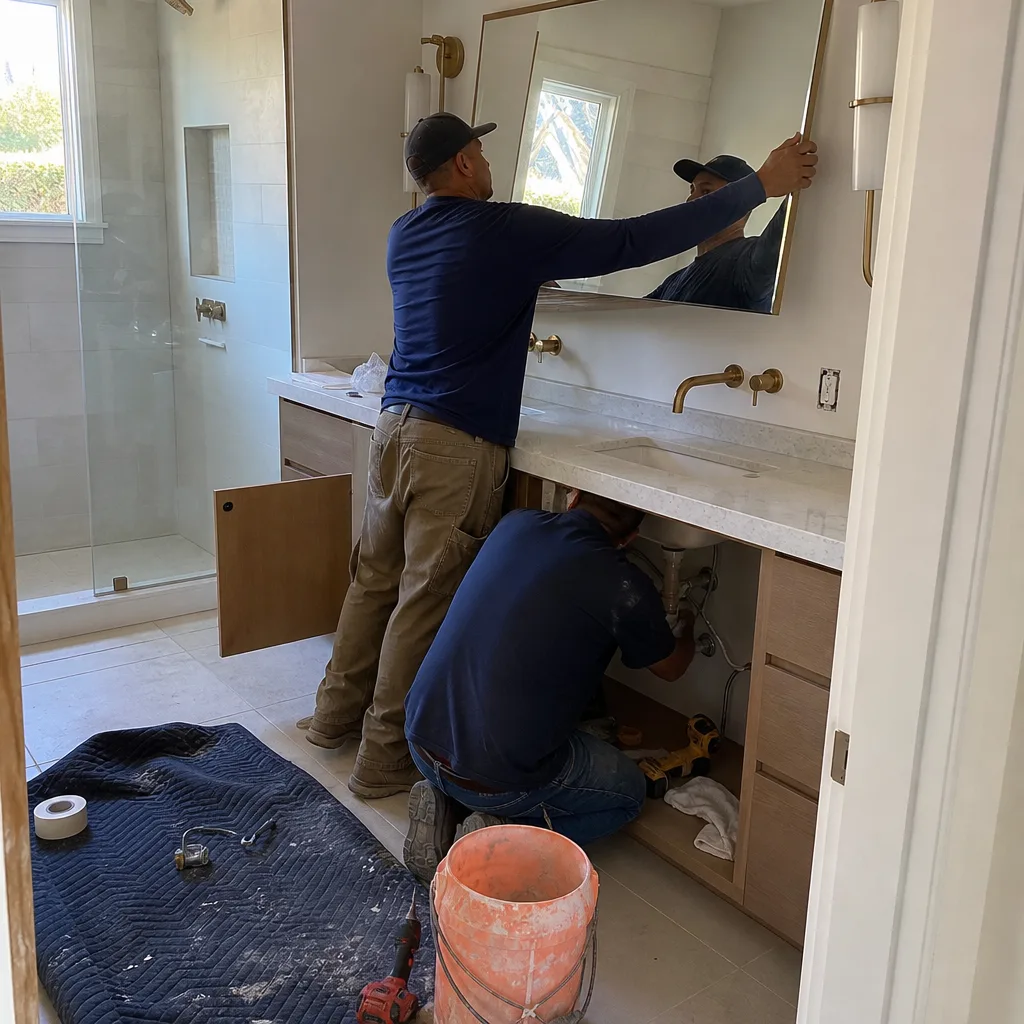
What you get with us is a specific, written number before any work starts. No allowances that balloon, no change orders that surprise you after the crew arrives. Graham Stein has been writing out every line item before a single tool touches the floor for years, and that habit applies to every Quikrete pour, patch, or stucco coat we do in San Francisco.
Which Quikrete Models This Applies To

Quikrete makes a broad line of bagged concrete, mortar, stucco, and repair products, and the compatibility question is less about a model number and more about the specific mix and the application. For a San Francisco home addition or ADU, the products you’ll most likely encounter are Quikrete 5000 Concrete Mix, Quikrete Crack-Resistant Concrete Mix, Quikrete Mason Mix Type S, and Quikrete Base Coat Stucco. Each is formulated for a specific job: 5000 is for footings and slabs, Crack-Resistant is for driveways and walkways where you don’t want control joints, Mason Mix Type S is for block walls and brick veneer, and Base Coat Stucco is the rough coat under a finish.
The compatibility gotcha in San Francisco is moisture. Quikrete 5000 is a good bagged mix, but in a fog-heavy neighborhood like the Sunset District or the Richmond, you need to pay attention to cure time and surface sealing. We also see a lot of homeowners who used a general-purpose mix for a retaining wall that should have been Type S mortar. The bag will say what it’s for. If the wall is structural, don’t guess. Another checkable detail: Quikrete 5000 reaches 5,000 psi at 28 days under lab conditions, but San Francisco’s cool, damp air slows that cure. We account for that in the schedule, and we’ll tell you when it’s safe to frame on top of it.
Styles & brands we work with







Signs Your Quikrete Home Additions & ADU Is Failing
- Spalling on the surface. Small chips and flakes on a slab or stucco wall mean water got in and is pushing the surface off. This is common in San Francisco where fog keeps surfaces damp for hours every morning, and it gets worse with every freeze-thaw cycle, rare as those are here.
- Cracks wider than a credit card. Hairline cracks happen. But if a crack in a slab or footing is wide enough to catch a fingernail, or if one side is higher than the other, you’ve got settlement or a poor pour. In San Francisco’s seismic setting, this deserves a professional look sooner rather than later.
- Efflorescence, the white chalky powder. This is salt being drawn through the concrete by water moving through it. If you see it on an ADU stem wall, you have water on the other side or wicking up from the soil. The fix is drainage, not just scrubbing the surface.
- Crumbling mortar joints. On block walls and brick veneer, if you can scrape mortar out with a screwdriver, the joint has lost its bond. Mason Mix Type S is what should have been used. If a general-purpose mix was substituted, the wall’s compressive strength at the joint is compromised.
- Stucco that sounds hollow. Tap the wall. A solid coat sounds dull. A hollow sound means the stucco has separated from the lath or the substrate. Water gets behind it, and the next step is a section coming off entirely.
Replacement Cost & What’s Included

In San Francisco, a home addition using Quikrete products runs $53,100 to $153,400. A full ADU, built to the city’s accessory dwelling unit code, runs $106,200 to $259,600. The range is driven by foundation type (slab versus raised), site access, soil conditions, and how much of the existing structure needs to be tied into. The written price we give you includes the Quikrete materials by name, the labor, the site protection, and the clean-up. There’s no separate charge for shoe covers or drop cloths, and we will send you a photo of the clean-up before the crew leaves, every day.
You’ll also get the 365-Day Done Right Promise on the concrete and masonry work. If something fails because of how we built it, within a year of completion, we make it right. That’s not a marketing promise. It’s stamped on the project paperwork.
See the difference
 Before
 After
After Before
 After
After Before
 After
AfterDIY or Call Us?
There are things you can safely check. Look at the bag for the mix type. Look at the crack width with a coin or a key. Check for hollow spots by tapping. Those observations help you describe the problem when you call.
What you shouldn’t do is pour a structural footing, patch a load-bearing wall, or re-coat a failing stucco wall without understanding what’s underneath. Cutting out and replacing a stem wall section or re-supporting a floor system is not a weekend job. Concrete work also involves silica dust. We run HEPA dust collection and wet-cutting where possible, and our crews wear proper respirators.
If you’re holding a bad bag of Quikrete or a failed patch, call us at (831) 480-4497. We’ll talk through what you’re seeing, and if it needs a visit, the estimate is free.
FAQs

A properly poured and cured concrete foundation in San Francisco should last 50 to 100 years or longer, provided drainage is kept away from the footing and the concrete is sealed where it’s exposed to the marine air. The main threats here are water intrusion and seismic movement, not the concrete itself failing.
If you’re concerned about an existing slab or stem wall, call (831) 480-4497 and we’ll look at it. The estimate is free.
Yes, if the damage is surface-level, like spalling or minor cracking, a repair with a Quikrete resurfacer or epoxy injection is often enough. If the slab has settled or the rebar has corroded, patching over it won’t fix the underlying cause, and a partial or full replacement is the honest answer.
Call us at (831) 480-4497 and we’ll tell you which one you have. No charge for the conversation.
For a typical San Francisco foundation or slab, you’re looking at 3 to 5 days from formwork to pour to curing before framing can start. Stucco work usually adds another week including cure time between coats. The full addition or ADU, from ground-breaking to final inspection, is typically 6 to 12 months depending on size and site conditions.
We schedule inspections around the city’s availability, and we’ll give you a written timeline with the written price. Call (831) 480-4497 to get started.
We keep Quikrete 5000, Crack-Resistant Concrete Mix, Mason Mix Type S, and Base Coat Stucco on hand for most San Francisco jobs, and we can have specialty Quikrete products delivered same-day from our local supplier. We also work with other named brands, including KraftMaid, Cambria, and Silestone for the interior finishes on an addition or ADU.
Tell us what you’re building, and we’ll bring what’s needed. Call (831) 480-4497.
Contact Elmstead Remodeling San Francisco
If you have a Quikrete home addition or ADU project in San Francisco, or you’re looking at a failed slab, stucco wall, or mortar joint, call us at (831) 480-4497. A live person answers the phone, day or night. We’ll give you a written price before any work starts, protect your floors and belongings while we’re there, and send you a photo of the clean-up before we leave. Tell me what the room needs to do, and we’ll figure out the rest from there.
Written by Graham Stein, Owner, Elmstead Remodeling San Francisco at Elmstead Remodeling San Francisco, serving San Francisco and nearby areas.


