









Free written scope consultation - allowances, timeline, and change-order rules on paper before a single trade is scheduled
ViewLux Fence Installation: The San Francisco Owner’s Guide
ViewLux fence installation in San Francisco typically runs $4,130 to $10,620 including materials and labor, and we stock ViewLux-compatible posts, panels, and hardware on our trucks for most common models. Most owners discover a problem the morning after a windstorm rolls in off the Pacific: a panel has pulled loose from its post, a gate drags against the sidewalk, or a bottom rail has started to separate where the fog sat against it all winter. We’re an independent contracting firm in San Francisco, not a ViewLux dealer, which means we match the product you already own rather than steering you toward a full replacement you don’t need.
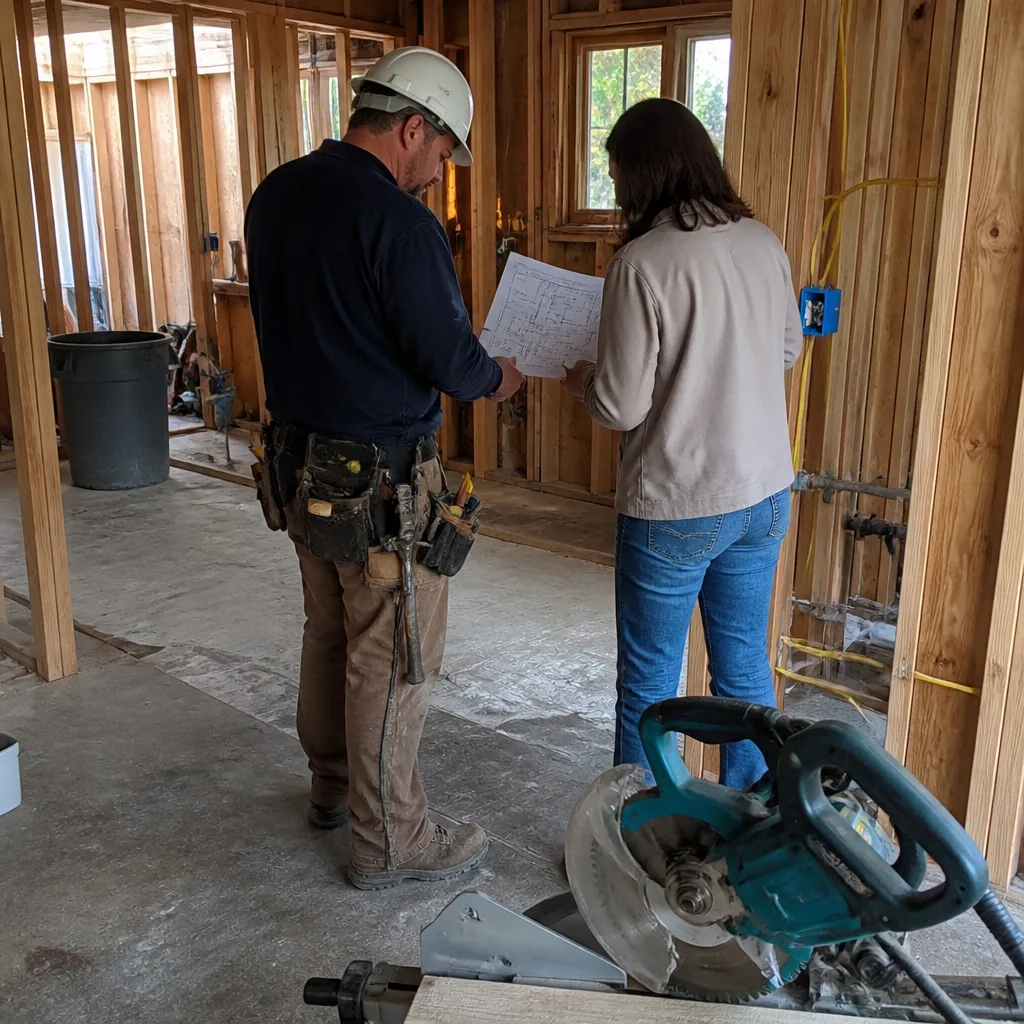
What we hear most often from families in the Sunset, the Richmond, and around Glen Park is that the fence looked fine until one specific panel stopped behaving. A post shifted in the sandy soil. A gate latch no longer lines up. The vinyl itself still looks nearly new, because ViewLux panels hold up well against sun and salt air, but the installation details are what fail first. That’s what we fix.
Which ViewLux Models This Applies To

ViewLux manufactures residential vinyl fence systems in a fairly consistent dimensional language: 1.5-inch and 2-inch rails, posts in 4-inch or 5-inch profiles, and panels that run 6 feet or 8 feet wide depending on the line. The compatibility gotcha we see on San Francisco job sites is rail depth. ViewLux’s premium series uses a deeper bottom rail than their economy line, and the two are not interchangeable, even when the panel width matches. If you pull a rail from a Richmond District home built with the economy profile and drop in a premium rail from a different supplier, the panel will rattle in the post pocket and the top rail will sit proud.
Before we order anything, we measure the rail profile and check the post wall thickness with a caliper, which takes about five minutes on site. For OEM parts, we match the exact ViewLux series name when the homeowner has the original paperwork or a stamped part number on the inside of a post cap. When the original series is discontinued, we use an aftermarket equivalent only if the wall thickness is within ten thousandths of the original and the UV stabilizer package is rated for coastal exposure. For most San Francisco installations, an aftermarket post with a thinner wall is not worth the savings, because the wind load on a 6-foot panel near the Avenues is exactly what it is: constant, salt-saturated, and unrelenting.
Styles & brands we work with







Signs Your ViewLux Fence Installation Is Failing
- A panel has pulled out of its post pocket. This usually means the post was set too shallow for the wind load it’s carrying, or the post pocket was not shimmed before the rail was seated. On San Francisco hillsides, we also see it when a retaining wall behind the fence has settled just enough to change the post angle.
- The gate drags or won’t latch. ViewLux gates are light, but the hinge posts take lateral load every time the gate swings. When a hinge post loosens in sandy soil, the gate sags and the latch bolt misses the strike by a quarter inch. Tightening the hinge screws won’t fix it if the post itself is moving.
- The bottom rail has cracked near the post. Fog moisture collects inside the rail channel and expands on warm afternoons. If the installed rail was cut without a drainage weep hole, that trapped water freezes-and-thaws just enough over a few winters to start a hairline crack.
- A post leans visibly but the fence still holds. This is the early-warning version of the first symptom. In San Francisco’s sandy western neighborhoods, a leaning post usually means the concrete footing was poured too small or the hole wasn’t deep enough. It will continue to lean.
- The top rail is separating from the pickets or the decorative cap. Vinyl expands and contracts with temperature swings. If the panels were installed tight against each other on a warm day, the first cold snap pulls seams open. We see this a lot on fences along the Great Highway and near Lake Merced, where morning-to-noon temperature swings run wider than in the Mission.
See the difference
 Before
 After
After Before
 After
After Before
 After
AfterReplacement Cost & What’s Included

For a ViewLux fence installation or repair in San Francisco, you’ll generally spend between $4,130 and $10,620 for a full section replacement with new posts, rails, panels, and hardware. A single post replacement with re-setting the adjacent panel typically lands around $1,200 to $2,400 depending on access, soil type, and whether we need to cut back roots from a mature street tree. Full gate replacement with a new hinge post and latch hardware falls between $1,500 and $3,200.
The range comes down to three things: how many posts actually need to be reset versus reused, whether the existing concrete footings can be cored or must be broken out, and whether the fence runs along a public sidewalk where SFDPW permits and pedestrian protection add cost. Every quote from our team is written out before any work starts, with each line item itemized: the specific ViewLux series or the aftermarket equivalent, the count of posts and panels, the concrete and hardware, and the labor to set and level each section. There’s no change order later for a post we “discovered” was leaning; if we need to flag something during demo, we tell you before we touch it. Our work carries the 365-Day Done Right Promise: if a panel settles out of level or a gate drifts out of latch after we leave, we come back and make it right.
DIY or Call Us?
What a homeowner can safely do is inspect: check each post by pushing on it at chest height, look for gaps where the rail leaves the post pocket, and open and close the gate several times while watching the hinge post. If the post moves at the base, you’re not fixing that with a wrench. Vinyl fence work is not high-tension dangerous like a garage spring, but it does involve hauling 90-pound bags of concrete up San Francisco staircases, digging post holes around established tree roots, and setting posts so they’re plumb in two directions at once. Get a post out of level and the entire panel set downstream will fight you.
The most common DIY mistake we’re called in to redo is setting posts in fast-set concrete without bracing them for the full cure. The post looks straight when they leave for the day; by morning, it has settled three degrees off plumb and every panel down the line shows it. If you’d rather have it measured, matched, and installed once, call us at (831) 480-4497 and we’ll bring a caliper, a level, and a written price to the walkthrough. Graham Stein still writes out every cost himself before a single tool touches the ground.
FAQs

A properly installed ViewLux fence lasts 20 to 30 years in San Francisco, with the vinyl panels themselves typically outlasting the posts and hardware. The real variable is the post footing: posts set at the correct depth with proper drainage and rebar stand up to decades of ocean wind, while shallow or undersized footings can start leaning within five to seven years in the western neighborhoods. Call (831) 480-4497 for an honest assessment of your existing posts before you commit to replacing the panels.
Yes, most ViewLux fence problems are repairable section by section, and we only replace the parts that have actually failed. Cracked bottom rails, leaning posts, and gate hardware issues are all common repairs that cost far less than a full fence replacement. Call (831) 480-4497 and we’ll tell you what can be salvaged and what can’t, with the price broken out line by line.
A single-post replacement or one-section repair is usually done in a day, including hauling away any broken concrete and vinyl. A full fence line replacement of six to eight panels takes two to three days in San Francisco, with a day for demolition and post setting and a day or two for panel installation and gate hardware. We schedule the work around nap hours and school drop-off when that matters to your household, and we use quiet tools where the site allows it.
We stock common ViewLux rail profiles, post caps, gate hinges, and latch hardware on our trucks, and we can order exact-series OEM replacement panels for most San Francisco installations within a week. If your series has been discontinued, we’ll show you an aftermarket equivalent side by side with the original spec before you spend a dollar. We also work with panels and hardware from KraftMaid, Cambria, and Silestone when a mixed-material fence calls for it.
Written by Graham Stein, Owner, Elmstead Remodeling San Francisco at Elmstead Remodeling San Francisco, serving San Francisco and nearby areas.


